
The Phone Call That Could Have Saved Seven Lives


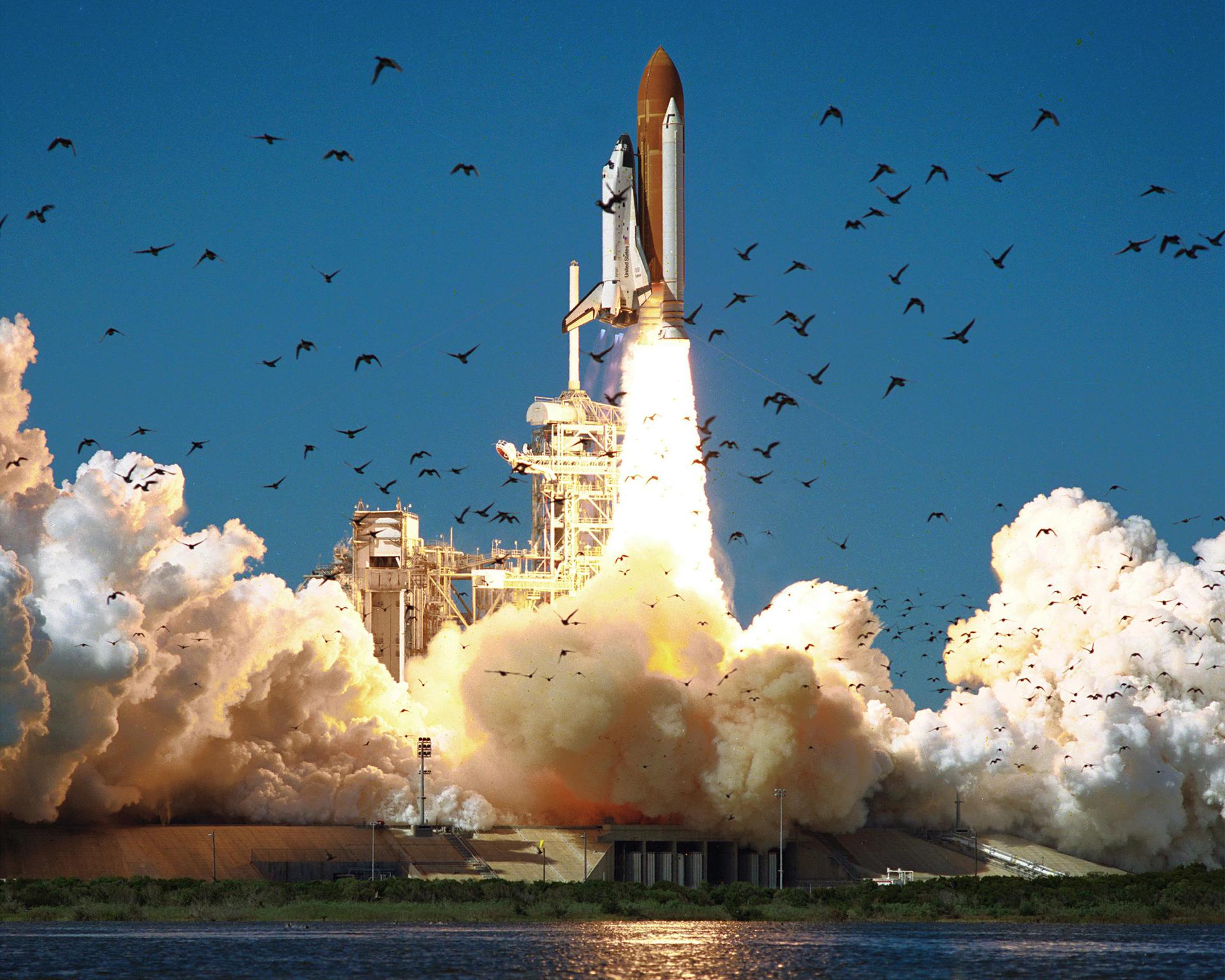
On the night of January 27, 1986, engineer Roger Boisjoly couldn’t sleep. In just a few hours, the Space Shuttle Challenger would launch, carrying seven astronauts including Christa McAuliffe, the first teacher headed to space. Boisjoly knew something that almost no one watching the launch would know: those seven people were sitting on top of a time bomb, and he had tried desperately to stop them from lighting the fuse.
The problem wasn’t some complex piece of space-age technology. It was a simple rubber ring, no more sophisticated than the seal around your coffee thermos. But on that unusually cold Florida morning, this humble O-ring would become one of the deadliest components in spaceflight history.
Table of Contents
Toggle
- The Teacher, The Crew, and The Dream
- A Rubber Ring and a Terrible Design
- The Engineers Who Tried to Stop It
- The Conference Call From Hell
- Seventy-Three Seconds
- The Aftermath That Changed Everything
- The Whistleblower’s Burden
- Why O-Rings Still Matter
- The Teacher Who Never Taught Her Lesson
The Teacher, The Crew, and The Dream
Americans were captivated by the Challenger mission for one special reason: Christa McAuliffe. Selected from over 11,000 applicants, this 37-year-old social studies teacher from New Hampshire was about to become the first civilian in space. She’d spent months training alongside six professional astronauts, preparing to teach lessons from orbit that would be broadcast to classrooms across the country.
Schools wheeled TVs into gymnasiums. Parents took time off work to watch. McAuliffe’s own students gathered in their school auditorium, wearing party hats and holding handmade signs. This wasn’t just another shuttle launch—this was the moment space travel became accessible to regular people. Or so everyone thought.
The crew represented the best of American diversity and expertise. Mission commander Dick Scobee had flown combat missions in Vietnam. Judith Resnik was one of America’s first female astronauts and an accomplished electrical engineer. Ronald McNair had overcome poverty and segregation to earn a PhD in physics from MIT. Michael Smith, Ellison Onizuka, and Gregory Jarvis each brought their own remarkable stories and expertise to the mission. Together, they embodied the promise that space belonged to everyone.
A Rubber Ring and a Terrible Design
To understand what killed the Challenger crew, you need to know about the Space Shuttle’s fatal flaw: it was built in pieces. The massive rocket boosters that lifted the shuttle off the launch pad weren’t single tubes of metal. They were segments stacked on top of each other like a giant industrial layer cake, and between each layer sat two rubber O-rings—the primary and the backup.
These O-rings had one job: keep superheated gases from escaping through the joints. Think of them like the rubber gasket in a pressure cooker, except instead of keeping steam from ruining your dinner, they kept 5,800-degree flames from turning the entire shuttle into a fireball.
Here’s the problem nobody wanted to admit: rubber gets stiff when it’s cold. You’ve probably noticed this with your car—how the doors might stick on a freezing morning, or how a basketball doesn’t bounce quite right in winter. The same thing happens to O-rings, except when an O-ring on your car fails, you might get a leak. When an O-ring on a Space Shuttle fails, people die.
The Engineers Who Tried to Stop It
Roger Boisjoly and his colleagues at Morton Thiokol, the company that built the rocket boosters, had been screaming about this problem for months. They’d seen disturbing evidence on previous flights—scorching and erosion on O-rings that suggested near-misses with catastrophe. After one flight, Boisjoly examined an O-ring that looked like someone had taken a blowtorch to it. The backup ring had held, but barely.
In a memo six months before Challenger’s launch, Boisjoly wrote words that would haunt him forever: “It is my honest and very real fear that if we do not take immediate action… we stand in jeopardy of losing a flight along with all the launch pad facilities.” His bosses filed the memo away and did nothing.
The night before the launch brought the crisis to a head. Weather forecasters predicted temperatures would drop to 29 degrees Fahrenheit—far colder than any previous shuttle launch. The O-rings had never been tested below 53 degrees. Boisjoly and his fellow engineers knew this was like playing Russian roulette with seven lives.
The Conference Call From Hell
What followed was one of the most tragic conference calls in history. Engineers from Morton Thiokol pleaded with NASA managers to postpone the launch. They presented data, charts, and their professional judgment that launching in freezing temperatures could be catastrophic. For a brief moment, it seemed like sanity would prevail—Morton Thiokol’s vice president of engineering initially recommended against launch.
Then NASA pushed back. Lawrence Mulloy, NASA’s manager for the rocket booster project, uttered words that would define the disaster: “My God, Thiokol, when do you want me to launch, next April?”
The pressure was immense. The Challenger launch had already been delayed multiple times. The Teacher in Space program was generating massive public interest. President Reagan was scheduled to mention the mission in his State of the Union address that night. In that moment, politics and schedule pressure outweighed engineering judgment.
Morton Thiokol’s managers asked for a five-minute break that stretched to half an hour. When they came back on the line, they had reversed their position. The engineers were literally told to take off their “engineering hats” and put on their “management hats.” The launch was approved. Boisjoly later said he felt like he’d been kicked in the stomach.
Seventy-Three Seconds
The morning of January 28 dawned crystal clear and bitterly cold for Florida—so cold that icicles hung from the launch tower. The astronauts, sealed in their cabin, had no idea about the fevered debates from the night before. Mission Control gave no indication that anything was amiss. At 11:38 AM, Challenger’s engines roared to life.
For most viewers, everything looked perfect. The shuttle rose majestically from the pad, trailing its signature pillar of white smoke. Spectators cheered. In classrooms across America, children watched in wonder. McAuliffe’s parents stood in the VIP viewing area, shielding their eyes from the Florida sun to track their daughter’s ascent.
But Roger Boisjoly, watching from a conference room in Utah, saw something different. At the moment of liftoff, a small puff of black smoke appeared near one of the joints in the right rocket booster. The O-ring had failed immediately, just as he’d predicted. For a few seconds, aluminum oxides from the burning fuel temporarily sealed the breach—a lucky break that gave the crew less than a minute of borrowed time.
At 58 seconds after launch, a small flame appeared on the side of the right booster. By 64 seconds, the flame had grown into a blowtorch, aimed directly at the external fuel tank. The shuttle was traveling at nearly twice the speed of sound, fighting against powerful aerodynamic forces that were pushing it to its structural limits.
At 73 seconds, the flame burned through the tank’s skin. Liquid hydrogen and oxygen mixed and ignited. In less than a second, the external tank exploded, and Challenger was torn apart by aerodynamic forces. The last words from the crew, spoken by pilot Michael Smith, were achingly mundane: “Uh-oh.”
The Aftermath That Changed Everything
The disaster played out on live television in excruciating detail. The shuttle’s destruction created a Y-shaped cloud that hung in the Florida sky like a terrible monument. Spectators went from cheering to confusion to horror as they realized what they were witnessing. In Christa McAuliffe’s classroom, her students watched their teacher die on live TV. The principal rushed to turn off the television, but it was too late.
The crew cabin, torn away from the rest of the shuttle, continued upward to 65,000 feet before beginning its two-and-a-half-minute plunge to the ocean. The astronauts were likely alive and possibly conscious for at least part of the fall—investigators found that three of the crew’s emergency air packs had been manually activated. They struck the ocean at over 200 miles per hour.
The investigation that followed revealed a pattern of ignored warnings, suppressed concerns, and a culture where schedule pressure overruled safety. Richard Feynman, the Nobel Prize-winning physicist on the investigation committee, demonstrated the O-ring problem with elegant simplicity: he dropped a piece of O-ring material in a glass of ice water during a televised hearing. The rubber lost its flexibility, proving in seconds what engineers had tried to explain with charts and data.
The Whistleblower’s Burden
Roger Boisjoly never recovered from Challenger. Though he was ultimately vindicated by the investigation, he was ostracized at work and eventually forced out of his job. He suffered from depression and PTSD, haunted by the knowledge that he had tried to prevent the disaster but couldn’t make anyone listen. He spent the rest of his life speaking about engineering ethics, turning his tragedy into a lesson for future generations.
“I could have done more,” he said years later, though it’s hard to imagine what else he could have done short of physically blocking the launch pad. He had written memos, made presentations, and argued until he was nearly in tears. The problem wasn’t that he hadn’t spoken up—it was that the people with power chose not to listen.
Why O-Rings Still Matter
The Challenger disaster fundamentally changed how NASA approaches spaceflight safety. Never again would engineers’ concerns be so casually dismissed. The Rogers Commission, which investigated the disaster, made sweeping recommendations that revolutionized NASA’s safety culture. Today, any engineer at NASA can stop a launch if they have safety concerns—a direct result of the seven lives lost on that cold January morning.
But the deeper lesson extends far beyond spaceflight. The Challenger disaster has become a cornerstone case study in engineering ethics courses worldwide. It demonstrates what happens when organizational pressure overrides technical expertise, when schedule becomes more important than safety, and when the people who understand the risks aren’t the ones making the decisions.
In our modern world of complex technology—from self-driving cars to medical devices to the phones in our pockets—we trust that someone, somewhere, is listening to the Roger Boisjolys who spot potential disasters. The Challenger reminds us that speaking up isn’t enough if the culture doesn’t support listening.
The Teacher Who Never Taught Her Lesson
Christa McAuliffe never got to teach her lessons from space, but her presence on that mission taught the world something profound: space exploration comes with real human costs. She had planned to conduct experiments showing how liquids behave in zero gravity, to describe what Earth looked like from orbit, and to share the wonder of space with millions of children. Instead, her death taught a different lesson about the importance of patience, safety, and listening to warnings.
Today, when you use your coffee maker, start your car, or trust any of the countless sealed systems in your daily life, you’re relying on O-rings and similar simple devices. They work so reliably that we never think about them—until they don’t. The Challenger disaster reminds us that in our increasingly complex world, catastrophe often hides in the simplest components, and the difference between safety and disaster sometimes comes down to whether we listen to the people brave enough to say, “This isn’t safe.”
Seven astronauts died not because space exploration is inherently dangerous—though it is—but because a group of managers decided that a rubber ring would probably hold just one more time. They were wrong, and that decision turned what should have been a triumph of education and exploration into one of the most preventable tragedies in American history. The O-ring that killed seven astronauts wasn’t defective. It performed exactly as the engineers said it would. The real failure was in the humans who chose not to listen.
Sources and Further Reading
- The Challenger Launch Decision by Diane Vaughan (University of Chicago Press, 1996)
- Report of the Presidential Commission on the Space Shuttle Challenger Accident (Rogers Commission Report, 1986)
- “Personal Observations on the Reliability of the Shuttle” by Richard P. Feynman (Appendix to Rogers Commission Report)
- NASA History Office Archives on STS-51-L/Challenger
- Roger Boisjoly Papers, Special Collections, University of Maryland Libraries
- Truth, Lies, and O-Rings: Inside the Space Shuttle Challenger Disaster by Allan J. McDonald and James R. Hansen (2009)