
The Three Mile Island Accident: America’s Nuclear Near-Disaster


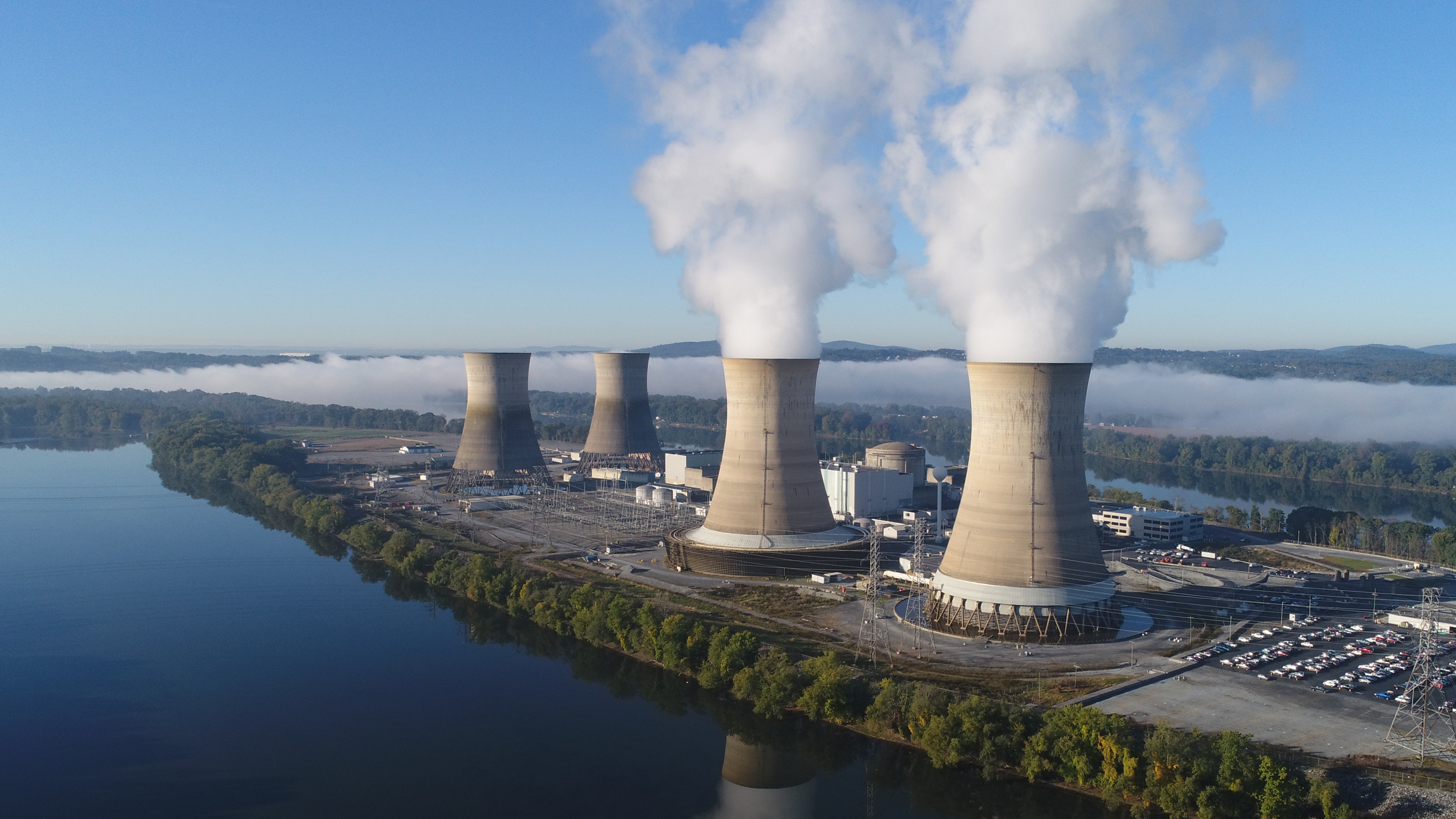
At 4:00 AM on March 28, 1979, a small valve stuck open in a nuclear reactor near Harrisburg, Pennsylvania. Within hours, half the reactor’s radioactive fuel had melted, the governor was considering evacuating 600,000 people, and pregnant women and children were fleeing in panic. America had just experienced its worst commercial nuclear accident—and most people watching the news had no idea how close they’d come to an unprecedented catastrophe.
The timing couldn’t have been more eerie. Just twelve days earlier, a Hollywood thriller called “The China Syndrome” had hit theaters, starring Jane Fonda as a reporter who uncovers safety violations at a nuclear plant. The movie’s title referred to the dark joke that a melting reactor core could burn straight through the Earth to China. Now, fiction was threatening to become reality in the middle of Pennsylvania.
Table of Contents
Toggle
- A Perfectly Normal Morning—Until It Wasn’t
- The China Syndrome Becomes Real
- “Tell My Mother to Leave”
- The Pregnant Women Who Changed Everything
- Hollywood’s Nightmare Prediction
- The Aftermath That Nobody Saw Coming
- Living in the Shadow
- The Lessons We’re Still Learning
- Sources and Further Reading
A Perfectly Normal Morning—Until It Wasn’t
Three Mile Island Nuclear Generating Station sat on a narrow strip of land in the Susquehanna River, about ten miles from Pennsylvania’s capital. The facility had two reactors, and Unit 2 was practically brand new, having operated commercially for just three months. The night shift operators that March morning were monitoring routine operations when their world suddenly exploded into chaos.
The trouble began in the basement, where workers were cleaning a water filter. Through a series of mundane mistakes—a blocked pipe here, a failed pump there—water stopped flowing to the steam generators that cooled the reactor. Think of it like your car’s radiator suddenly going dry while the engine’s running at full speed. The reactor automatically shut down, which should have solved the problem. But that’s when things went from bad to catastrophic.
A pressure relief valve opened to release steam, exactly as designed. But then it stuck open—and nobody knew it. For the next two hours and twenty minutes, thousands of gallons of radioactive coolant gushed out through that valve like water from a bathtub with the drain left open. The control room operators, staring at a dashboard light that incorrectly showed the valve as closed, had no idea they were watching their reactor slowly cook itself from the inside.
The China Syndrome Becomes Real
As coolant drained away, the reactor’s uranium fuel core began heating up like a pot left on the stove with no water. The temperature soared past 4,000 degrees Fahrenheit—hot enough to melt steel, concrete, and the uranium fuel pellets themselves. The zirconium tubes holding the fuel began to rupture and oxidize, creating hydrogen gas that would later explode inside the containment building with a thud that shook the entire facility.
Here’s what makes this terrifying: nuclear fuel doesn’t just stop being radioactive when a reactor shuts down. The fuel continues generating decay heat, like coals in a barbecue that stay hot long after you stop adding charcoal. Without coolant, that heat has nowhere to go. Half of the reactor’s core melted into a radioactive lava that pooled at the bottom of the reactor vessel, burning through five-eighths of the massive steel container.
The operators, trained to prevent the reactor from overfilling with water, actually made things worse by shutting off emergency cooling pumps. They were like doctors treating a patient for high blood pressure while the patient was actually bleeding to death—addressing the wrong problem because their instruments were lying to them.
“Tell My Mother to Leave”
By dawn, radiation alarms were screaming throughout the plant. A general emergency was declared—the first in U.S. commercial nuclear power history. Plant officials initially told authorities there was no danger to the public, but they were wrong. Radioactive gases were already venting into the morning air.
The miscommunication that followed turned confusion into near-panic. Pennsylvania Governor Dick Thornburgh received conflicting reports all day. The Nuclear Regulatory Commission couldn’t get straight answers. The utility company insisted everything was under control while radiation readings suggested otherwise. One NRC official would later describe the information flow as “like a couple of blind men staggering around making decisions.”
By Friday, two days after the accident began, officials detected a hydrogen bubble inside the reactor vessel. If that bubble exploded, it could breach the containment building and release massive amounts of radiation across central Pennsylvania. Suddenly, evacuation wasn’t just precautionary—it might be necessary for survival.
Governor Thornburgh made a fateful announcement: pregnant women and preschool children within five miles of the plant should evacuate immediately. The “voluntary” evacuation triggered something closer to exodus. Within days, an estimated 140,000 people had fled the area, creating traffic jams on rural Pennsylvania roads never designed for mass evacuation. Hotels hundreds of miles away filled with frightened families. Pet shelters overflowed with abandoned animals.
The Pregnant Women Who Changed Everything
Among those fleeing were hundreds of pregnant women whose personal terror would reshape America’s nuclear future. These weren’t anti-nuclear activists—they were ordinary people who’d lived peacefully next to Three Mile Island for years. Now they were driving through the night with their children, not knowing if they’d been exposed to radiation that might harm their unborn babies.
One evacuee, a young mother named Jane Lee, later testified that she could taste metal in the air—a sign of radiation exposure. Whether real or psychosomatic, that metallic taste became a shared memory among many who fled. Years later, these families would form the backbone of anti-nuclear movements, their fears transforming from personal to political.
The psychological impact rippled outward. A study found that mothers living within ten miles of Three Mile Island showed stress levels comparable to combat veterans. Church services held for evacuees drew sobbing crowds. The local community’s trust—in technology, in government, in the utility company—had melted down along with the reactor core.
Hollywood’s Nightmare Prediction
The uncanny timing of “The China Syndrome” turned Jack Lemmon and Jane Fonda into unlikely prophets. In the film, Lemmon’s character warns that a meltdown could render “an area the size of Pennsylvania uninhabitable.” Now, with a real meltdown occurring in Pennsylvania, the movie became required viewing for understanding nuclear accidents.
The film’s technical advisor would later reveal that they’d actually toned down their accident scenario because they thought audiences wouldn’t believe anything worse. Reality had proven more dramatic than Hollywood fiction. Movie theaters reported audiences leaving showings to call relatives in Pennsylvania, checking if they were safe.
This collision of entertainment and catastrophe fundamentally changed how Americans thought about nuclear power. Before Three Mile Island, nuclear plants were symbols of progress and clean energy. After, they became synonymous with invisible danger and corporate lies.
The Aftermath That Nobody Saw Coming
When President Jimmy Carter arrived on April 1—no joke—wearing protective yellow booties to tour the plant, he brought unique credentials: he was a trained nuclear engineer from his Navy submarine days. His visit was meant to calm fears, showing it was safe enough for the President to visit. But his grim expression told a different story.
The cleanup would take fourteen years and cost over one billion dollars. Workers wouldn’t even be able to open the reactor vessel to see the damage for five years. When they finally sent in a robot camera, they discovered the melted fuel had formed a crust “like crème brûlée,” as one engineer memorably described it—if crème brûlée were radioactive and could kill you.
But the real meltdown happened in public opinion. Before Three Mile Island, America had 129 nuclear plants planned or under construction. After, almost all were cancelled. The accident didn’t directly kill anyone—official studies found radiation releases were relatively small—but it killed the American nuclear industry more effectively than any protest movement could have.
Living in the Shadow
Today, Three Mile Island’s surviving Unit 1 reactor operated until 2019, its cooling towers still defining the Susquehanna River’s horizon. Locals developed a dark humor about their infamous neighbor. Gift shops sold “I Survived Three Mile Island” t-shirts. The Harrisburg Senators baseball team hosted “Three Mile Island Night” promotions.
Yet the fear never fully dissipated. Every unexpected siren, every minor reported “incident” at the plant rekindled old anxieties. Studies tracking cancer rates in the surrounding counties showed no definitive increases, but try telling that to someone who fled with their children that March morning in 1979. The absence of proof isn’t the same as proof of absence, especially when you’re talking about your family’s health.
The accident fundamentally rewired America’s relationship with nuclear power. France, which experienced no such disaster, went on to generate most of its electricity from nuclear plants. The United States, traumatized by those five days in Pennsylvania, essentially stopped building new reactors for thirty years.
The Lessons We’re Still Learning
Three Mile Island wasn’t a natural disaster or an act of sabotage. It was a cascade of small failures—a stuck valve, a misleading indicator light, operators making the wrong decision with incomplete information—that nearly created an unprecedented catastrophe. The accident proved that nuclear power’s greatest vulnerability wasn’t the technology but the humans operating it.
Today, as climate change pushes us to reconsider nuclear power as a carbon-free energy source, Three Mile Island stands as both a warning and a puzzle. Was the public reaction proportional to the actual danger? Or did we dodge a bullet so narrowly that our fear was entirely justified?
Perhaps the most unsettling truth about Three Mile Island is that we’ll never really know how close we came to disaster. The hydrogen bubble that terrified officials for days? Some experts later argued it could never have exploded. The mass evacuation? Maybe unnecessary. The melted fuel? It stayed contained, barely.
But “barely” isn’t very comforting when you’re talking about rendering Pennsylvania uninhabitable. Sometimes the disasters that don’t quite happen teach us more than the ones that do. Three Mile Island showed us that our most advanced technology could fail in ways we never imagined, that the experts we trusted could be wrong, and that Hollywood’s nightmares could come terrifyingly close to coming true. The reactor core wasn’t the only thing that melted down in March 1979—so did America’s atomic optimism, and it has never fully recovered.
Sources and Further Reading
- Walker, J. Samuel. Three Mile Island: A Nuclear Crisis in Historical Perspective. University of California Press, 2004.
- Nuclear Regulatory Commission. “Backgrounder on the Three Mile Island Accident.” U.S.NRC Official Reports.
- Kemeny Commission. Report of the President’s Commission on the Accident at Three Mile Island. October 1979.
- Stephens, Mark. Three Mile Island: The Hour-by-Hour Account of What Really Happened. Random House, 1980.
- Pennsylvania Department of Health. “Three Mile Island Health Registry Reports.” Various years.
- American Nuclear Society. “What Happened and What Didn’t in the TMI-2 Accident.” Special Report Series.