
The Cambridge Analytica Scandal: How Facebook Data Swayed Elections
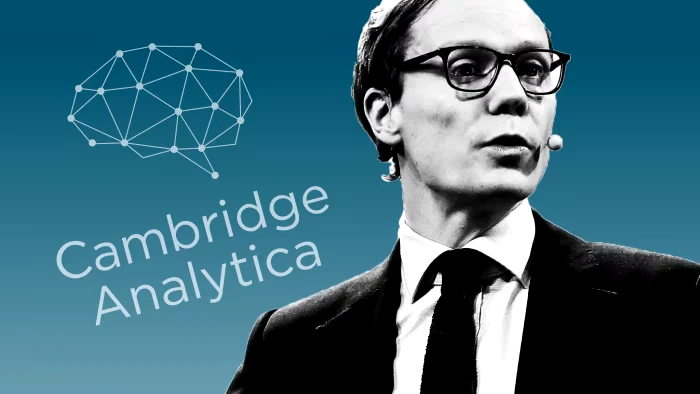
Christopher Wylie had pink hair, a nose ring, and a secret that would shake democracy to its core. In March 2018, the 28-year-old data scientist sat down with journalists and uttered words that would wipe $100 billion from Facebook’s market value overnight: “We exploited Facebook to harvest millions of people’s profiles. And built models to exploit what we knew about them and target their inner demons.” He wasn’t speaking metaphorically. The company he’d helped create, Cambridge Analytica, had turned your Facebook likes into a weapon of mass manipulation.
If you liked “thunderstorms” on Facebook, Cambridge Analytica knew you were more neurotic than average. If you liked “The Colbert Report,” you probably scored high on openness. Every click, like, and share you thought was harmless social media fun was actually feeding a massive psychological warfare operation designed to change the course of elections. And here’s the kicker: you probably gave them permission without even knowing it.
This isn’t a story about data theft, though that’s what many people think. It’s about something far more disturbing—how the innocent-looking personality quizzes your aunt shares on Facebook became the backbone of a global political influence machine that helped elect presidents and swing referendums.
Table of Contents
Toggle
- The Professor, the Quiz, and 87 Million Friends
- The Manipulators in Expensive Suits
- “We Used Every Trick in the Book”
- The Trump Card Nobody Saw Coming
- The Whistleblower’s Revenge
- The Aftermath That Changed Nothing and Everything
- The Ghost in the Machine
- You Are the Product Being Sold
- Sources and Further Reading
The Professor, the Quiz, and 87 Million Friends
It started with a personality quiz. You’ve seen dozens like it: “Which Disney Princess Are You?” or “What Does Your Birthday Say About Your Soul?” Harmless fun, right? In 2014, a Cambridge University researcher named Aleksandr Kogan created one called “This Is Your Digital Life.” About 270,000 Facebook users took it, earning a few dollars each for answering questions about their personalities.
But here’s where things get sinister. When users authorized the quiz, they didn’t just give Kogan access to their own data—Facebook’s loose privacy settings at the time meant he could also harvest data from all their friends. Those 270,000 people unknowingly handed over the personal information of 87 million users. It was like giving someone the key to your house and discovering they’d also made copies for your entire neighborhood.
Kogan wasn’t interested in telling people which “Friends” character they were. He was building something unprecedented: a massive database linking Facebook profiles to psychological profiles. Every page you liked, every post you shared, every photo you commented on became a data point in understanding not just what you thought, but how you thought.
The goldmine of data landed in the hands of Cambridge Analytica, a company that promised political campaigns something irresistible: the ability to map the entire American electorate’s personalities and manipulate them accordingly.
The Manipulators in Expensive Suits
Cambridge Analytica wasn’t your typical political consultancy. Founded by billionaire Robert Mercer and led by Steve Bannon (yes, that Steve Bannon), the company claimed it could peer into voters’ souls using a technique called psychographic profiling. Think of it as political targeting on steroids.
Traditional political campaigns might target “women aged 35-50 in suburban Ohio.” Cambridge Analytica could target “neurotic introverts with authoritarian tendencies who feel overlooked by society.” They didn’t just know if you were likely to vote Republican or Democrat—they knew exactly which emotional buttons to push to change your mind.
Alexander Nix, Cambridge Analytica’s CEO, bragged about this capability in a presentation that would later come back to haunt him. He showed how they could take a basic political message—like the importance of gun rights—and customize it for different personality types. For highly neurotic people, they’d emphasize home invasion threats. For conscientious types, they’d focus on protecting your family. Same political goal, completely different psychological manipulation.
The company built detailed profiles of 230 million American adults—essentially every voter in the country. They knew you better than you knew yourself, or at least they claimed to.
“We Used Every Trick in the Book”
In early 2018, British broadcaster Channel 4 sent undercover reporters posing as wealthy Sri Lankan clients seeking to influence an election. What Cambridge Analytica executives said in those secretly recorded meetings was jaw-dropping.
They openly discussed entrapping political opponents with Ukrainian prostitutes. They offered to create fake IDs and websites to spread misinformation. “We just put information into the bloodstream of the internet and then watch it grow,” one executive explained. “It’s unattributable, untrackable.”
These weren’t rogue employees talking tough to impress clients. This was the company’s senior leadership, including CEO Alexander Nix, casually describing their standard operating procedure. They called it “intelligence gathering” and “opposition research.” Critics had other words for it: election manipulation, psychological warfare, and undermining democracy itself.
The Trump Card Nobody Saw Coming
During the 2016 U.S. presidential election, Cambridge Analytica ran Donald Trump’s digital operation, working out of his San Antonio campaign headquarters. They tested 175,000 different ad variations on Facebook—sometimes running 50,000 variants in a single day. Each ad was microscopically tailored to specific personality profiles.
If you were identified as highly agreeable but low on openness, you might see ads about Hillary Clinton’s emails framed as a betrayal of trust. If you scored high on neuroticism, you’d get dark warnings about terrorism and immigration. They called this “behavioral microtargeting,” but it was really mass manipulation personalized to an audience of one: you.
Brad Parscale, Trump’s digital campaign director, would later credit Facebook with winning them the election. “Facebook and Twitter were the reason we won this thing,” he said. Cambridge Analytica claimed they were the secret sauce that made it work, though the actual effectiveness of their methods remains hotly debated.
Here’s what we know for certain: the Trump campaign paid Cambridge Analytica at least $6 million. The company had data on tens of millions of American voters obtained through questionable means. And Facebook became the battlefield where democracy was fought using weapons most voters didn’t know existed.
The Whistleblower’s Revenge
Christopher Wylie never intended to destroy democracy. The Canadian data scientist saw himself as building something revolutionary—using data science to understand society better. But as he watched his creation deployed in Brexit and Trump’s election, he realized he’d helped build “Steve Bannon’s psychological warfare mindfuck tool.”
In March 2018, Wylie decided to blow the whistle. His revelations to The Guardian and The New York Times exposed not just Cambridge Analytica’s methods, but Facebook’s complicity in allowing it to happen. The social media giant had known about the data harvesting since 2015 but had done little beyond asking Cambridge Analytica to delete the data—which they pinky-promised to do but never actually did.
The scandal exploded across headlines worldwide. Mark Zuckerberg was hauled before Congress, where he endured two days of grilling from lawmakers who barely understood how Facebook worked, let alone how it had been weaponized. His robotic responses and booster seat became instant memes, but the underlying issues were no laughing matter.
The Aftermath That Changed Nothing and Everything
Cambridge Analytica declared bankruptcy within two months of the scandal breaking. Executives abandoned ship faster than rats fleeing the Titanic. But like a hydra, cutting off the head only spawned new monsters. Many of the same people simply started new companies doing exactly the same thing under different names.
Facebook paid a record $5 billion fine to the Federal Trade Commission—the largest penalty ever imposed on a company for violating consumers’ privacy. Yet that represented just one month of Facebook’s revenue. The company’s stock price, which initially tanked, recovered within months and then soared to new heights.
The real impact was psychological. Millions of people suddenly understood that their data wasn’t just being used to show them ads for shoes they’d already bought. It was being weaponized to influence their most fundamental political beliefs. The comfortable fiction that social media was just harmless fun died overnight.
The Ghost in the Machine
Today, Cambridge Analytica is gone, but its ghost haunts every election. The techniques they pioneered—psychological profiling, behavioral microtargeting, dark posts that disappear without a trace—are now standard practice in political campaigns worldwide. The company didn’t invent election manipulation, but they industrialized it, turning it from art to science.
Facebook (now Meta) claims to have tightened its data policies, but critics argue the fundamental business model—surveillance capitalism that profits from knowing everything about you—remains unchanged. They’ve made it harder for third parties to access data, but Facebook itself still knows more about you than ever before. The vampire is now guarding the blood bank.
The most chilling part? Cambridge Analytica was probably just the tip of the iceberg. How many other companies harvested Facebook data? How many still have it? How many elections were influenced by techniques we’ll never know about? These questions keep democracy scholars awake at night.
You Are the Product Being Sold
The Cambridge Analytica scandal revealed an uncomfortable truth about the digital age: if something is free, you’re not the customer—you’re the product being sold. Every quiz you take, every article you share, every emoji reaction you leave is building a profile that knows you better than your closest friends.
That personality quiz your mom shared last week? The one that tells her which “Golden Girls” character she is? It’s probably harvesting her data right now, building a profile that will be sold to the highest bidder. The difference post-Cambridge Analytica is that now we know it’s happening. Whether we care enough to stop it is another question entirely.
The scandal fundamentally changed how we think about privacy, social media, and democracy itself. It proved that with enough data and no scruples, you could hack not just computers but human minds. The question now isn’t whether our democracies can survive social media—it’s whether they already haven’t, and we just don’t know it yet.
Sources and Further Reading
- “Mindf*ck: Cambridge Analytica and the Plot to Break America” by Christopher Wylie (2019)
- Federal Trade Commission Report: “FTC Imposes $5 Billion Penalty and Sweeping New Privacy Restrictions on Facebook” (2019)
- UK Parliament Digital, Culture, Media and Sport Committee: “Disinformation and ‘Fake News’: Final Report” (2019)
- “Targeted: The Cambridge Analytica Whistleblower’s Inside Story” – Brittany Kaiser (2019)
- Mueller Report: “Report On The Investigation Into Russian Interference In The 2016 Presidential Election” (2019)
- Academic study: “The Data That Turned the World Upside Down” – Grassegger & Krogerus, Motherboard (2017)
- UK Information Commissioner’s Office: “Investigation into the Use of Data Analytics in Political Campaigns” (2018)